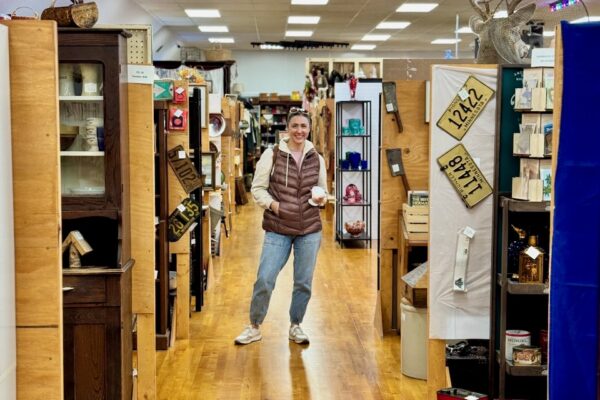

Flohmärkte und Trödelmärkte sind wahre Schatzkisten für Sammler und Schnäppchenjäger. Hier finden sich nicht nur alltägliche Gegenstände, sondern auch ungewöhnliche und wertvolle Sammlerstücke. Von historischen Antiquitäten bis zu kuriosen Fundstücken – wer mit offenen Augen sucht, wird belohnt.
Antike Stacheldraht-Sammlerstücke
In September 2023, a thousand strands of antique barbed wire, amassed over 75 years by a dedicated Californian collector, sold for $999 on eBay. As the Antique Barbed Wire Society says, ‘Barbed wire has been an integral and important part of the history of the West.’ First patented in 1863, the invention of barbed wire allowed pioneers to divide land into smaller pastures- a crucial development in the expansion of the United States. Today, barbed wire collectors make for an unusual sub-culture- forming a band of passionate and erudite devotees. For those in search of the hidden, the quirky and the unusual, there are a surprising number of unusual collecting fields, easily overlooked in junk shops, thrift stores or garage yard sales.

Edwardianische Biskuitdosen
When is a biscuit tin, not a biscuit tin? When it’s made by Huntley & Palmer. Huntley & Palmer of Reading, England, invented the decorative biscuit tin in 1831. In 1868, the firm commissioned the distinguished printer De La Rue & Co. to create a decorative biscuit tin to a design by the Victorian architect and designer Owen Jones. Known as the ‘Ben George’- after the patentee of the transfer process, this is the earliest known example of a printed biscuit tin. By the 1870s, offset lithography (a newly invented technique for printing on metal) meant that novelty biscuit tins could be produced in all sorts of ingenious shapes and sizes. During the Edwardian era, luxury biscuit tins were produced in imaginative and attractive representations: leather-bound books (‘The Waverley’), miniature Islamic tables, Japanese caskets, miniature glazed china cabinets, tea caddies, racing cars, children’s prams and sentry boxes. Huntley & Palmers Sentry Box biscuit tin depicting soldiers 1909. Photo © Spicer Auctioneers Biscuit tins can be valuable. A pre-First World War Huntley & Palmer sentry box, decorated with images of German, British, French, and Russian soldiers, sold for £350 at Spicer Auctioneers in Yorkshire, England, in 2023. Two delightful 1920s biscuit tins- one for Crawford’s shortbreads and the other for Huntley & Palmer biscuits, both depicting open-topped London double-decker buses- fetched a staggering $8,750 at Heritage Auctions in 2017.

Knöpfe als Sammlerstücke
The humble button can be surprisingly collectable – and affordable – especially for people interested in history, fashion, or military history. Buttons have been used for centuries, and many have intricate designs, patterns, and even historical significance. Collectors often look for buttons from specific time periods, such as the Victorian era, or from particular events, like military campaigns. Buttons can also be made from various materials, including metal, glass, and even porcelain, adding to their collectability. Whether you’re a seasoned collector or just starting out, buttons offer a fascinating and accessible way to explore history and art through everyday objects.

Häufige Fragen
Wie erkenne ich wertvolle Sammlerstücke auf Flohmärkten?
Wertvolle Sammlerstücke erkennt man oft an ihrer Seltenheit, ihrem Zustand und ihrer historischen Bedeutung. Informieren Sie sich im Voraus über die typischen Merkmale und Marken von Sammlerstücken, die Sie interessieren. Achten Sie auf Details wie Herstellerzeichen, Material und Alter.
Wo finde ich die besten Flohmärkte für Sammlerstücke?
Die besten Flohmärkte für Sammlerstücke finden Sie oft in größeren Städten oder in Regionen mit einer starken Antiquitätenkultur. Lokale Flohmarktseiten und Veranstaltungskalender können helfen, regelmäßige Märkte zu finden. Auch Online-Plattformen wie eBay oder spezielle Sammlerforen bieten wertvolle Tipps.
Wie verhandle ich erfolgreich auf Flohmärkten?
Verhandeln Sie freundlich und respektvoll. Zeigen Sie Interesse an dem Stück und fragen Sie nach dem Preis. Wenn der Verkäufer bereit ist, können Sie einen fairen Preis vorschlagen, der unter dem geforderten Preis liegt. Seien Sie jedoch nicht zu gierig, da ein guter Zustand und Seltenheit den Wert erhöhen können.
Fazit
Flohmärkte und Trödelmärkte sind ideale Orte, um ungewöhnliche und wertvolle Sammlerstücke zu entdecken. Mit etwas Wissen und Geduld können Sie echte Schätze finden, die nicht nur Ihre Sammlung bereichern, sondern auch eine interessante Geschichte erzählen. Ob antike Stacheldraht-Sammlerstücke, edwardianische Biskuitdosen oder historische Knöpfe – die Möglichkeiten sind vielfältig und spannend.